News 2026

Rupak Majumdar awarded ERC Advanced Grant

June 2026
MPI-SWS Scientific Director Rupak Majumdar has been awarded an ERC Advanced Grant worth approximately €2.5 million for his project „Pascal: Formal Performance Analysis at Scale“. The project aims to develop new mathematical foundations and practical tools for analyzing and verifying the performance and resilience of large-scale distributed computer systems.

Whether it is online banking, email, video streaming, global cloud platforms, or large-scale AI infrastructures – planetary-scale distributed systems form the backbone of many societal-scale applications. ...
MPI-SWS Scientific Director Rupak Majumdar has been awarded an ERC Advanced Grant worth approximately €2.5 million for his project „Pascal: Formal Performance Analysis at Scale“. The project aims to develop new mathematical foundations and practical tools for analyzing and verifying the performance and resilience of large-scale distributed computer systems.

Whether it is online banking, email, video streaming, global cloud platforms, or large-scale AI infrastructures – planetary-scale distributed systems form the backbone of many societal-scale applications. We take for granted the continuous availability of these services, even though outages can cause widespread disruption. Yet today, developers do not have principled approaches to provision, analyze, or prove performance or resilience properties of such systems. Currently, developers test for such properties using expensive but inadequate workload testing, and availability outages continue to be a problem for users.

The now EU-funded project "Pascal: Formal Performance Analysis at Scale" addresses the major challenge of formally reasoning about (that is, mathematically describing and verifying) the performance and resilience of large-scale distributed systems. Its ultimate goal is to develop methodologies and tools that system developers can use to reason about implementations of their systems.

Rupak Majumdar has been a Scientific Director at the Max Planck Institute for Software Systems since 2010 and an Honorary Professor in the Department of Computer Science at the Rhineland-Palatinate University of Technology Kaiserslautern-Landau (RPTU). This is the second ERC grant he has received. In 2015, together with Michael Backes, Peter Druschel, and Gerhard Weikum, he was awarded an ERC Synergy Grant for the project ImPACT: Privacy, Accountability, Compliance, and Trust in Tomorrow’s Internet. The ERC Synergy Grant is the European Research Council’s most highly funded grant scheme.

More info from the ERC.
Read more

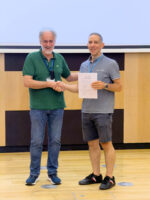
Derek Dreyer receives 2026 SIGPLAN Distinguished Service Award

The ACM Special Interest Group on Programming Languages (SIGPLAN) has awarded their 2026 Distinguished Service Award to MPI-SWS Scientific Director Derek Dreyer. The award citation reads as follows:
Derek Dreyer has set an exemplary standard of service within the PL community. Throughout the years, Derek has served in almost every possible role in our community, including General Chair of ICFP’19, Program Chair of POPL’24, and Associate Chair of OOPSLA’23 and PLDI’26. Since 2017, he is an Associate Editor of TOPLAS; ...
The ACM Special Interest Group on Programming Languages (SIGPLAN) has awarded their 2026 Distinguished Service Award to MPI-SWS Scientific Director Derek Dreyer. The award citation reads as follows:
Derek Dreyer has set an exemplary standard of service within the PL community. Throughout the years, Derek has served in almost every possible role in our community, including General Chair of ICFP’19, Program Chair of POPL’24, and Associate Chair of OOPSLA’23 and PLDI’26. Since 2017, he is an Associate Editor of TOPLAS; since 2023, he is on the PACMPL advisory board; and since 2022, he is co-editor-in-chief of the Journal of Functional Programming, presently overseeing the transfer of the journal to Diamond Open Access. But Derek’s service work began much earlier. While still an assistant professor, he was moderator of the TYPES mailing list and volunteered to serve on the SIGPLAN Executive Committee (2012-15) as Awards Chair. In 2020, he helped safeguard the perception of programming languages research outside the field, when the CORE ranking committee threatened to demote the rankings of several major PL conferences. Derek has also been a prominent mentor for students, postdocs, and junior faculty. He chaired early editions of PLMW and co-founded the RTFM workshop on faculty mentoring (at PLDI’24 and POPL’26). He frequently speaks at such events, and is known for his widely-cited talks on speaking and writing skills: “How to Write Papers and Give Talks That People Can Follow”. Last but not least, Derek has written popular blog posts touching on the more “human” aspects of a career in research such as: accepting criticism, handling rejection, struggling to maintain a work-life balance, and impostor syndrome. In summary, Derek has served the community in many ways, always striving to promote the value and the quality of PL research, to help maintain cohesion in our community, and to empower junior researchers to conduct outstanding PL research.

The Distinguished Service Award is given by ACM SIGPLAN to recognize distinguished service contributions to the Programming Languages Community. The award recognizes contributions to ACM SIGPLAN, its conferences, publications, or its local activities. The award includes a prize of $2,500.
Read more

Otto Hahn Medal awarded to two MPI-SWS students

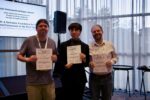
Toghrul Karimov and Simon Spies have each been awarded a 2025 Otto Hahn Medal for outstanding scientific achievement. The Max Planck Society awards the Otto Hahn Medal annually to young scientists in recognition of outstanding scientific achievement. Toghrul was awarded the medal for fundamental contributions to automated formal verification of linear dynamical systems, while Simon was awarded the medal for his work on expanding both the expressive power and automated reasoning capabilities of the Iris framework for program verification. ...
Toghrul Karimov and Simon Spies have each been awarded a 2025 Otto Hahn Medal for outstanding scientific achievement. The Max Planck Society awards the Otto Hahn Medal annually to young scientists in recognition of outstanding scientific achievement. Toghrul was awarded the medal for fundamental contributions to automated formal verification of linear dynamical systems, while Simon was awarded the medal for his work on expanding both the expressive power and automated reasoning capabilities of the Iris framework for program verification.

Toghrul obtained his PhD in Feb 2024, and was advised by Joël Ouaknine. Toghrul is now a postdoctoral researcher within the ERC Synergy Grant "DynAMiCs", working with Valérie Berthé.

Simon obtained his PhD in August 2025, and was advised by Derek Dreyer. Simon is now a software engineer working on the OCaml compiler at Jane Street in London.

This is the second time in six years that two MPI-SWS students have been awarded the Otto Hahn Medal in the same year.

 
Read more

MPI researchers receive Distinguished Paper Award at PLDI 2026

MPI-SWS researchers Travis Hance, Laila Elbeheiry, and Derek Dreyer--along with their collaborator Yusuke Matsushita--have received a PLDI 2026 Distinguished Paper Award for their paper "VerusBelt: A Semantic Foundation for Verus’s Proof-Oriented Extensions to the Rust Type System."

At PLDI this year, only 10 papers were given this award out of 115 accepted papers.

MPI-SWS researchers receive a Best Paper Award at SIGCSE TS 2026

MPI-SWS researchers Tung Phung and Adish Singla, jointly with colleagues from the University of Michigan, the University of Minnesota and Microsoft, have received a Best Paper Award at the 57th ACM Technical Symposium on Computer Science Education (SIGCSE TS 2026), for their paper titled Closing the Loop: An Instructor-in-the-Loop AI Assistance System for Supporting Student Help-Seeking in Programming Education. At SIGCSE TS 2026, only 9 papers were given this award out of 174 accepted papers. Congratulations!

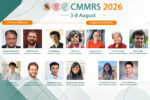
CMMRS 2026 program has been announced!

The program for the 2026 edition of CMMRS is now online. This year's lineup of lecturers and mentors once again includes international leaders as well as rising stars in their respective research fields. Lectures will cover a variety of cutting-edge topics in AI, NLP, formal methods, programming languages, and software engineering. Please note that attendance at this interactive mentoring school is limited to admitted students. The next application deadline will be in early 2027.

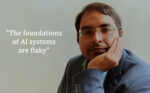
Interview with Krishna Gummadi on the agency of artificial intelligence, AI agents, and potential societal impacts

AI agents have improved rapidly and demonstrate remarkable capabilities in areas such as communication and software programming. In this interview, MPI-SWS director Krishna Gummadi clarifies the characteristics of AI agents and discusses the benefits they offer people and the risks they pose to society.


MPI researcher receives Outstanding Paper Award at ICLR 2026

Anthony W. Lin -- Max Planck Fellow at MPI-SWS and CS professor at RPTU in Kaiserslautern -- has received an Outstanding Paper Award at ICLR 2026, one of the flagship conferences in machine learning, for his work on "Transformers are Inherently Succinct” (https://openreview.net/forum?id=Yxz92UuPLQ)!

This is an incredible achievement — only two out of over 5,000 accepted ICLR papers have received such an award this year!

Max Planck researchers publish 20 papers at LICS/ICALP 2026

Researchers from the Max Planck Institute for Software Systems (MPI-SWS), the Max Planck Institute for Informatics (MPI-INF), and the Max Planck Institute for Security and Privacy (MPI-SP) have coauthored 20 papers at the LICS 2026 and ICALP 2026 conferences, two of the top conferences in theoretical computer science. LICS is the premier conference on logic in computer science and ICALP is the flagship conference of the European Association for Theoretical Computer Science. ...
Researchers from the Max Planck Institute for Software Systems (MPI-SWS), the Max Planck Institute for Informatics (MPI-INF), and the Max Planck Institute for Security and Privacy (MPI-SP) have coauthored 20 papers at the LICS 2026 and ICALP 2026 conferences, two of the top conferences in theoretical computer science. LICS is the premier conference on logic in computer science and ICALP is the flagship conference of the European Association for Theoretical Computer Science.

From MPI-SWS:

  1. Automata on S-adic Words. Valérie Berthé, Toghrul Karimov, and Mihir Vahanwala (ICALP, Track B)

  2. Hypersequent calculi have Ackermannian upper bounds. A. R. Balasubramanian, Vitor Greati and Revantha Ramanayake (LICS)

  3. Infinite-State Games with Energy Objectives Beyond Counters. Irmak Sağlam and Georg Zetzsche (ICALP, Track B)

  4. On the Subspace Orbit Problem and the Simultaneous Skolem Problem. Piotr Bacik and Anton Varonka (LICS)

  5. On Variable-Bounded Non-Linear Expansions of Presburger Arithmetic. Piotr Bacik, Joris Nieuwveld, Joël Ouaknine, Mihir Vahanwala, Madhavan Venkatesh and Emil Rugaard Wieser (LICS)

  6. Optimally Controlling a Random Population. Hugo Gimbert, Corto Mascle, Patrick Totzke (ICALP, Track B)

  7. Optimal Sequential Flows. Hugo Gimbert, Corto Mascle, Patrick Totzke (ICALP, Track A)

  8. Population Protocols over Ordered Agents. Michael Blondin, Michaël Cadilhac, Benjamin Courchesne, Lucie Guillou, Corto Mascle, and Isa Vialard (ICALP, Track B)

  9. The Complexity of Nested Reset Counter Systems. A. R. Balasubramanian and Franzisco Schmidt (LICS)

  10. The Complexity of Downward Closures of Indexed Languages. Richard Mandel, Corto Mascle and Georg Zetzsche (LICS)


From MPI-SP:

  1. Complete Relational Logic for Infinite-Dimensional Quantum Programs with Unbounded Assertions. Gilles Barthe, Minbo Gao, Jam Kabeer Ali Khan, Matthijs Muis, Ivan Renison, Keiya Sakabe, Michael Walter, Yingte Xu, Tianshi Yu and Li Zhou (LICS)


From MPI-INF:

  1. A Faster Directed Single-Source Shortest Path Algorithm. Ran Duan, Xiao Mao, Xinkai Shu, Longhui Yin (ICALP, Track A)

  2. Computing the (k+2)-Edge-Connected Components in k-Edge-Connected Digraphs in Subquadratic Time. Loukas Georgiadis, Evangelos Kipouridis, Evangelos Kosinas, Charis Papadopoulos, Nikos Parotsidis (ICALP, Track A)

  3. Faster Algorithms for k-Orthogonal Vectors in Low Dimension. Anita Dürr, Evangelos Kipouridis, Michael Lampis, Karol Węgrzycki (ICALP, Track A)

  4. Fast Decremental Tree Sums in Forests. Benjamin Aram Berendsohn, Marek Sokołowski (ICALP, Track A)

  5. Improved Tree Sparsifiers in Near-Linear Time. Daniel Agassy, Dani Dorfman, Haim Kaplan (ICALP, Track A)

  6. Low Rank MSO. Mikołaj Bojańczyk, Michał Pilipczuk, Wojciech Przybyszewski, Marek Sokołowski and Giannos Stamoulis (LICS)

  7. Node-Weighted Triangles: Faster and Simpler. Shyan Akmal, Nick Fischer (ICALP, Track A)

  8. Permutation Patterns in Streams. Benjamin Aram Berendsohn (ICALP, Track A)

  9. Random Access in Grammar-Compressed Strings: Optimal Trade-Offs in Almost All Parameter Regimes. Anouk Duyster, Tomasz Kociumaka (ICALP, Track A)


Read more

"Teaming for Excellence" Horizon Proposal funded with INESC-ID and DFKI Kaiserslautern

April 2026
MPI-SWS researchers (together with DFKI in Kaiserslautern and researchers at INESC-ID) have been funded under the competitive Horizon Europe "Teaming for Excellence" programme. Their project will receive funding of 13M Euros from the European Union over 6 years.

The project, for a Sustainable Artificial Intelligence Laboratory (SAIL), will be a transformative project that will upgrade INESC-ID into a world-class Centre of Excellence (CoE) dedicated to the development of state-of-the-art, sustainable, and trustworthy
Artificial Intelligence. ...
MPI-SWS researchers (together with DFKI in Kaiserslautern and researchers at INESC-ID) have been funded under the competitive Horizon Europe "Teaming for Excellence" programme. Their project will receive funding of 13M Euros from the European Union over 6 years.

The project, for a Sustainable Artificial Intelligence Laboratory (SAIL), will be a transformative project that will upgrade INESC-ID into a world-class Centre of Excellence (CoE) dedicated to the development of state-of-the-art, sustainable, and trustworthy
Artificial Intelligence. The project will tackle grand challenges in AI such as explainability, reasoning, and out-of-distribution performance. The Centre of Excellence will also strongly focus on education, launching a world-class Dual PhD programme in AI, jointly awarded by Instituto Superior Técnico (Portugal) and Rheinland-Pfälzische Technische Universität (RPTU, Germany).

Recognising the critical need for safe and fair AI, SAIL will also establish an AI Ethics and Regulation Hub to provide compliance guidelines and AI programs for citizens and professionals. Finally, SAIL will create a network of physical and computational infrastructure for the development and testing of technologies.
Read more

MPI-SWS researchers receive 2026 EATCS Best Paper award

The EATCS Award for the best theory paper at ETAPS 2026 was awarded to Isa Vialard, Joël Ouaknine and Quentin Guilmant for their paper "The value problem for weighted timed games with two clocks is undecidable", published in FoSSaCS 2026. The EATCS award is given each year to the best ETAPS papers in theoretical computer science.

The paper solves a long-standing open problem in the field of quantitative games. Weighted timed games were introduced in several works in the early 2000s, ...
The EATCS Award for the best theory paper at ETAPS 2026 was awarded to Isa Vialard, Joël Ouaknine and Quentin Guilmant for their paper "The value problem for weighted timed games with two clocks is undecidable", published in FoSSaCS 2026. The EATCS award is given each year to the best ETAPS papers in theoretical computer science.

The paper solves a long-standing open problem in the field of quantitative games. Weighted timed games were introduced in several works in the early 2000s, and constitute a fundamental model for formal verification and control. The key decision problems for quantitative games are the existence of winning strategies and the ‘value problem’: is the inf-sup across all pairs of Minimizer/Maximizer strategies smaller than a given rational? With three clocks, the value problem was proved undecidable in 2015. With a single clock, the problem was shown to be decidable in 2022. This paper finally closes the gap: with two clocks, both problems are shown to be undecidable using a novel and ingenious reduction, resulting in a deep contribution
Read more

Joël Ouaknine appointed EATCS Fellow

MPI-SWS scientific director Joël Ouaknine was appointed as a Fellow by the European Association for Theoretical Computer Science (EATCS). Joël, who leads the “Foundations of Algorithmic Verification” research group, was appointed EATCS fellow for "fundamental contributions to the algorithmic analysis of dynamical systems and related formalisms."

The EATCS Fellows Program was established by the association in 2014 to recognize outstanding EATCS members for their scientific achievements in the field of Theoretical Computer Science. ...
MPI-SWS scientific director Joël Ouaknine was appointed as a Fellow by the European Association for Theoretical Computer Science (EATCS). Joël, who leads the “Foundations of Algorithmic Verification” research group, was appointed EATCS fellow for "fundamental contributions to the algorithmic analysis of dynamical systems and related formalisms."

The EATCS Fellows Program was established by the association in 2014 to recognize outstanding EATCS members for their scientific achievements in the field of Theoretical Computer Science.

Further Information: 

Read more

MPI-SWS faculty participate in the new Max Planck School of Biomedical Artificial Intelligence

MPI-SWS has recently become a partner of the Max Planck School of Biomedical Artificial Intelligence, a new graduate school developing advanced AI methods for basic life sciences research. The school's focus will be on deepening understanding of biological systems by combining modern biomedical technologies with innovative approaches to artificial intelligence. The aim is to train a new generation of scientists who will develop algorithms that can learn, explain, and predict the principles of living systems and use these findings for molecular design. ...
MPI-SWS has recently become a partner of the Max Planck School of Biomedical Artificial Intelligence, a new graduate school developing advanced AI methods for basic life sciences research. The school's focus will be on deepening understanding of biological systems by combining modern biomedical technologies with innovative approaches to artificial intelligence. The aim is to train a new generation of scientists who will develop algorithms that can learn, explain, and predict the principles of living systems and use these findings for molecular design.

The fellows of the school are internationally recognized researchers from 24 institutions -- including 14 Max Planck Institutes -- who come from a wide variety of fields, ranging from image and speech processing to immunology. From MPI-SWS, Krishna Gummadi, head of the Networked Systems research group, has been named a fellow of the newly founded graduate school.

The spokesperson of the new school is Karsten Borgwardt, Director at the Max Planck Institute of Biochemistry in Martinsried near Munich, where the administration of the school will also be located. The new School will be financed under the funding agreement between the Max Planck Society and the Dieter Schwarz Foundation, as well as through contributions from the participating institutions.

The plan is to accept the first applications for doctoral positions at the school starting in fall 2026, with the first BMAI cohort beginning their doctoral studies in fall 2027.

About the Max Planck Schools

Since 2019, the Max Planck Schools are offering a visionary graduate program to exceptional PhD candidates. The faculties of each School unite the best scholars in their field to teach and work with highly motivated doctoral candidates, all embedded in a unique network spanning across universities and non-university research organizations. The Max Planck Schools are looking for highly talented applicants with Bachelor’s or Master’s degrees from all over the world, aiming to further develop their research skills and network in one of the most innovative graduate programs in Germany.

Further information:

Announcement by the Max Planck Society:
 https://www.mpg.de/26250857/max-planck-school-of-biomedical-artificial-intelligence

Announcement by the Max Planck Schools:
https://www.maxplanckschools.org/de/news-events/start-der-max-planck-school-of-biomedical-artificial-intelligence
Read more

Derek Dreyer achieves a publication record!

As of January this year, MPI-SWS faculty member Derek Dreyer has published 26 papers at POPL (more than any other author) and a total of 61 papers across all four flagship SIGPLAN conferences---a record number!

Most downloaded PACMPL paper of 2025

The paper Tree Borrows (authored by Neven Villani, Johannes Hostert, Derek Dreyer, and Ralf Jung), not only received a Distinguished Paper Award at PLDI'25, but in the year 2025 it was the single most downloaded article from all issues of the entire PACMPL (the ACM journal publishing the proceedings of POPL, PLDI, ICFP, and OOPSLA). Although the paper was only published in June 2025, it has already been downloaded over 9000 times! ...
The paper Tree Borrows (authored by Neven Villani, Johannes Hostert, Derek Dreyer, and Ralf Jung), not only received a Distinguished Paper Award at PLDI'25, but in the year 2025 it was the single most downloaded article from all issues of the entire PACMPL (the ACM journal publishing the proceedings of POPL, PLDI, ICFP, and OOPSLA). Although the paper was only published in June 2025, it has already been downloaded over 9000 times!

You can find the list of most-downloaded PACMPL papers in 2025 here: https://dl.acm.org/journal/pacmpl/announcements

Read more about Tree Borrows here and here.
Read more

Max Planck researchers publish 5 papers at POPL 2026!

Researchers from the Max Planck Institute for Software Systems (MPI-SWS) have authored a total of 5 papers accepted to POPL 2026.  This is the ninth year in a row that MPI-SWS researchers have published 5+ papers in POPL.

Congratulations to all our POPL authors!
...
Researchers from the Max Planck Institute for Software Systems (MPI-SWS) have authored a total of 5 papers accepted to POPL 2026.  This is the ninth year in a row that MPI-SWS researchers have published 5+ papers in POPL.

Congratulations to all our POPL authors!

 
Read more

The Cornell, Maryland, Max Planck Pre-doctoral Research School 2026 (CMMRS 2026)

January 2026
The Cornell, Maryland, Max Planck Pre-doctoral Research School 2026
https://cmmrs.mpi-sws.org

August 3–7, 2026
Saarbruecken, Germany

Applications are requested from undergraduate students or Master’s students in computer and information science, computer engineering, or a related discipline to the 10th annual Cornell, Maryland, Max Planck Pre-doctoral Research School.

The small, select group of attendees will be exposed to state-of-the-art research in computer science, have the opportunity to interact one-on-one with internationally leading scientists from three of the foremost academic institutions in research and higher learning in the US and in Europe, ...
The Cornell, Maryland, Max Planck Pre-doctoral Research School 2026
https://cmmrs.mpi-sws.org

August 3–7, 2026
Saarbruecken, Germany

Applications are requested from undergraduate students or Master’s students in computer and information science, computer engineering, or a related discipline to the 10th annual Cornell, Maryland, Max Planck Pre-doctoral Research School.

The small, select group of attendees will be exposed to state-of-the-art research in computer science, have the opportunity to interact one-on-one with internationally leading scientists from three of the foremost academic institutions in research and higher learning in the US and in Europe, and network with like-minded students. They will get a sense of what it is like to pursue an academic or an industrial research career in computer science and have a head start when applying for graduate school.

For full consideration, applications should be received by February 14, 2026 AOE. Travel and accommodation will be covered for accepted students. Further information about the school and how to apply can be found at https://cmmrs.mpi-sws.org
Read more